Deformation Monitoring & Scan-Based Movement Surveys
Track structural deformation, settlement, and site movement using a combination of high-density 3D laser scanning and precise survey control. Scan-based monitoring captures full surface geometry over time — not just discrete prism points — so adjacent buildings, slopes, retaining walls, historic structures, and excavation faces can be compared epoch-to-epoch with confidence. In the East Bay hills this includes landslide and slope-creep monitoring: many hillside neighborhoods sit on mapped slow-moving landslides that creep fractions of an inch per year and accelerate in wet winters. Repeat laser-scan epochs compare the entire slope surface — millions of points, not a handful of stakes — detecting millimeter-level movement patterns across the whole hillside before cracks appear in foundations and streets.
Protect Your Investment
- Scan-to-scan comparison of full building or slope geometry
- Combined laser scanning and conventional control for precision
- Early detection of movement and deformation
- Regular monitoring schedules — pre-construction baseline through closeout
- Precise measurements suitable for risk and liability documentation
- Comprehensive reports with visual deformation heat maps
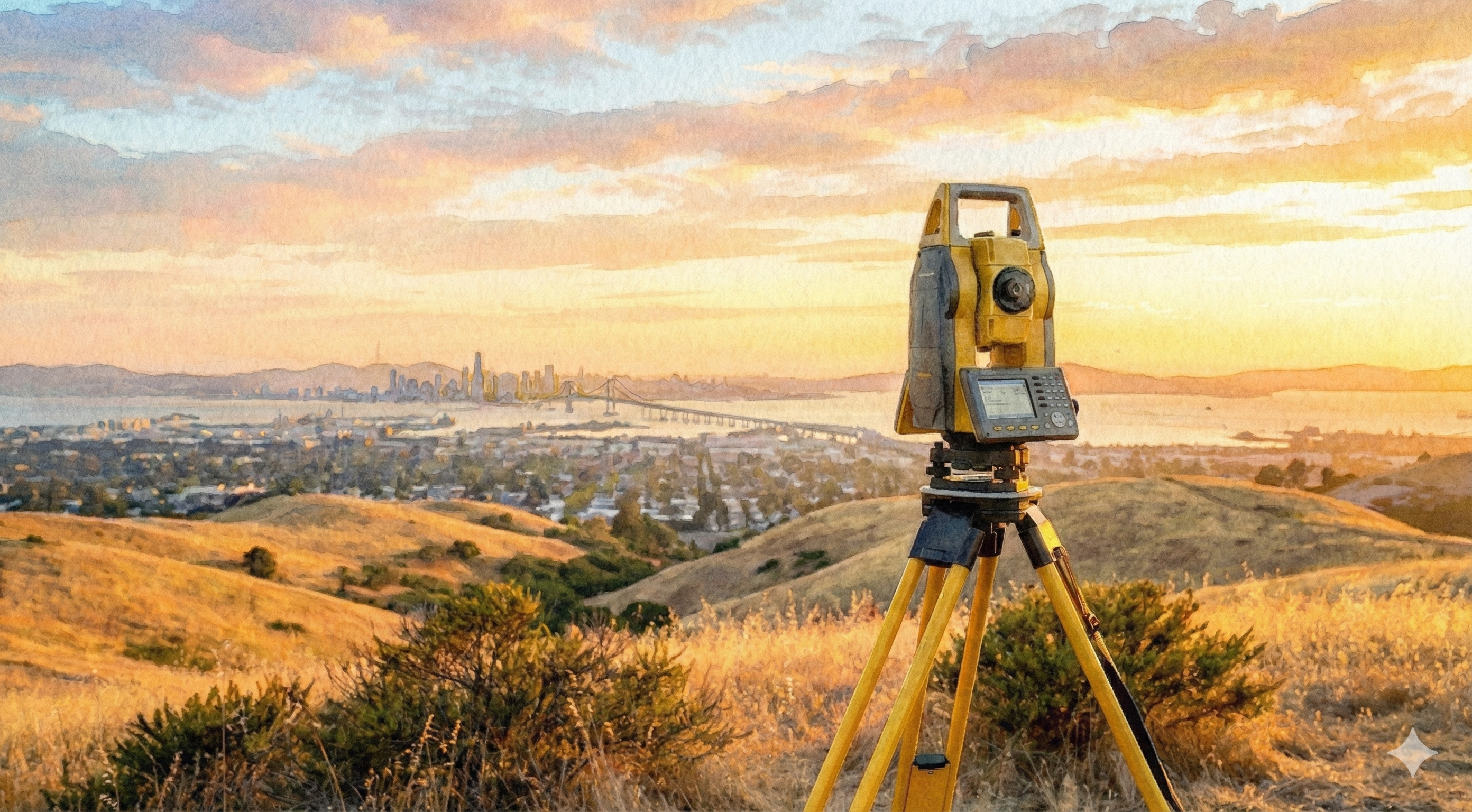
Movement Monitoring
Baseline and repeat measurements for changing sites.
Track movement, settlement, construction impacts, or structural change with repeatable measurements.
Our Process
Systematic monitoring to detect movement early.
Baseline Survey
We establish monitoring points and take initial precise measurements as the reference baseline.
Monitoring Schedule
Regular surveys are conducted according to project requirements—weekly, monthly, or as needed.
Data Analysis
Each survey is compared to the baseline to detect and quantify any movement.
Reporting
Clear reports showing movement trends and alerts if thresholds are exceeded.
Deformation Monitoring FAQ
Common questions about monitoring surveys.
Related Services
Other services for construction projects.
3D Scanning
Capture existing conditions once and give every stakeholder a reliable source of truth.
Learn MoreConstruction Staking
Translate design plans into precise field locations for construction.
Learn MoreMonument Preservation
Pre-construction monument preservation surveys required by California Business & Professions Code §8771.
Learn MoreNeed Monitoring Services?
Contact us to discuss your project requirements and monitoring schedule.
Meeting-first estimates • Response within 24 hours • Serious projects only